Having a tooth extracted is a significant procedure, and what you do afterward plays a huge role in how quickly and comfortably you heal. At Dentist Near Me, we want to ensure your recovery is smooth and complication-free. While we’ll give you specific instructions before you leave the office, it’s easy to forget the details once you get home.
This guide covers everything you need to know about taking care of yourself after a surgical extraction. By following these simple steps, you can minimize discomfort and get back to your normal routine as soon as possible.
Immediate Postoperative Care
The first 48 hours after your surgery are crucial for healing. During this time, a blood clot forms in the socket where the tooth was removed. This clot is essential because it stops bleeding and protects the underlying bone and nerves.
To protect this clot and ensure proper healing:
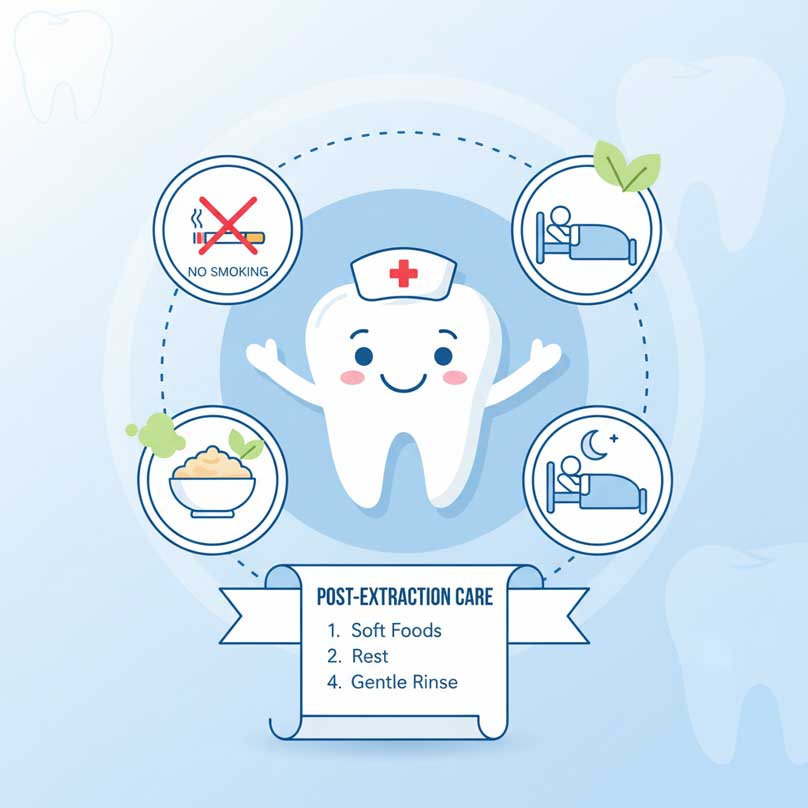
- Avoid Tobacco: Do not smoke or use smokeless tobacco for at least 48 hours. Tobacco chemicals can delay healing and increase the risk of complications like dry socket.
- Skip the Alcohol: Do not consume alcoholic beverages for at least 48 hours, as alcohol can thin your blood and interfere with medication.
- Protect the Suction: Avoid spitting forcefully, rinsing vigorously, swishing liquids around your mouth, or using a straw for at least 24 hours. The suction created by using a straw is a common cause of dislodging the blood clot.
Caring for the Surgical Site
Proper care of the extraction site helps manage bleeding and swelling.
- Managing Bleeding: You will likely leave our office biting on a piece of gauze. Keep biting on this gauze for 30 minutes as instructed by your doctor. If bleeding persists after that, replace it with fresh gauze and continue applying steady pressure. It is better to keep consistent pressure rather than changing the gauze frequently.
- What to Expect: Slight bleeding or oozing is normal for the first day or two. To protect your bedding, you might want to place an old towel over your pillow or use an old pillowcase when you sleep.
- Managing Swelling: On the day of surgery, you can apply ice packs to the side of your face near the extraction site. Use the “20 minutes on, 20 minutes off” rule to help reduce swelling. Swelling typically peaks within 48 to 72 hours and will slowly go down after that.
Activity and Rest
Your body needs energy to heal, so rest is your best friend right now.
- Go Straight Home: Plan to go directly home after your surgery. Avoid taking stairs by yourself immediately after the procedure if you feel lightheaded or groggy.
- Take it Easy: Do not engage in sports, aerobics, or heavy lifting for at least 3 days. Elevated heart rate and blood pressure can cause the extraction site to bleed.
- Be Gentle: Remember the rule about suction—avoid spitting or using straws for at least 24 hours to keep that protective clot in place.
Medication Guidelines
Your doctor may prescribe medications to help manage pain and prevent infection.
- Follow Instructions: Take all medications exactly as directed. If antibiotics are prescribed, it is vital to finish the entire course, even if you feel better.
- Safety First: Do not drive or operate heavy machinery if you are taking prescribed pain medication, as it can cause drowsiness or impaired judgment.
- Oral Hygiene: Start using the prescribed mouth rinse 24 hours after surgery. Do not rinse on the day of the surgery.
What to Eat and Drink
Nutrition is important for healing, but you need to be careful about what you eat to avoid irritating the surgical site.
For the first 24-48 hours, stick to a soft diet:
- Mashed potatoes
- Soup (warm, not hot)
- Scrambled eggs
- Yogurt and pudding
- Pastas
- Milkshakes and seedless smoothies (remember: no straws!)
Foods to AVOID for the first week:
- Straws (suction risk)
- Fruits with seeds (strawberry seeds can get stuck in the socket)
- Popcorn, chips, and nuts (sharp pieces can injure the site)
- Acidic foods like oranges and tomatoes/sauces (can cause stinging)
- Carbonated drinks
Make sure to drink plenty of fluids to stay hydrated, which aids in the recovery process.
When to Call the Doctor
Most recoveries proceed without issues, but it is important to know the warning signs. Contact Dentist Near Me immediately if you experience:
- A temperature greater than 101.5°F.
- Increasing pain or pain that does not get better with medication.
- Bleeding or swelling that seems excessive or goes beyond what your doctor told you to expect.
We are here to support you every step of the way. If you have any questions about your recovery instructions, don’t hesitate to reach out to our office.