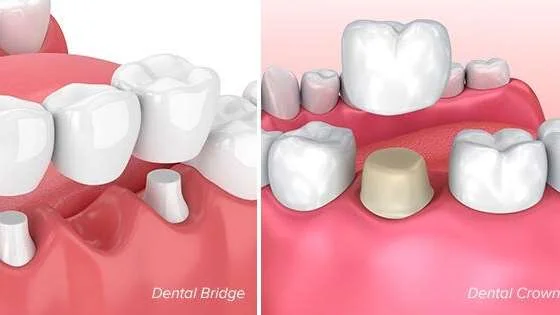
You have just completed the first major step in restoring your smile with a dental crown or bridge. This appointment involved preparing your tooth and placing a temporary restoration. While your permanent, custom-made crown or bridge is being crafted, this temporary version plays a crucial role in protecting your oral health and ensuring the success of your final treatment.
At Dentist Near Me, we want your recovery period to be as comfortable and straightforward as possible. Proper aftercare during this time is essential for protecting your tooth and ensuring your final restoration fits perfectly. This guide will walk you through what to expect, what to eat, and how to care for your smile in the coming weeks.
What to Expect Immediately After Your Appointment
When you leave our office, it’s likely that your tongue, lips, and the roof of your mouth will still feel numb from the local anesthetic. This sensation typically lasts for a few hours.
It is vital to be careful during this time. Since your mouth is numb, you cannot properly feel temperature or pain. This makes it very easy to accidentally bite your cheek, tongue, or lip, or to burn yourself with a hot beverage. For this reason, we strongly advise you to refrain from eating and drinking hot beverages until the numbness has completely worn off. If you are thirsty, stick to cool or lukewarm liquids. Once full feeling returns, you can safely eat.
Managing Discomfort and Sensitivity
Once the anesthesia wears off, it is normal to experience some tenderness or sensitivity to temperature and pressure. The tooth has undergone a significant procedure, and the surrounding gum tissue may be slightly irritated. This sensitivity is usually temporary and should start to fade within a few days. However, mild sensitivity can sometimes last for a few weeks, even after the final restoration is placed.
Pain Management Strategies
If you experience discomfort after the numbness subsides, over-the-counter pain medication can be very effective. Ibuprofen (Advil, Motrin) is often recommended because it helps reduce both pain and inflammation. Take it as directed to stay comfortable. If your pain becomes severe, gets progressively worse, or cannot be managed with medication, please contact our office right away.
Eating with a Temporary Crown or Bridge
Your temporary restoration is made from a strong acrylic material, but it is not designed to be as durable as your permanent crown. It is secured with temporary cement, which allows your dentist to remove it easily at your next visit. Because of this, you need to be mindful of your diet to prevent it from breaking or coming loose.
For the first 24 hours after your appointment, we recommend you stick to a soft food diet. This gives the temporary cement time to fully set and allows the tooth to settle.
Foods to Avoid
To protect your temporary restoration, you must avoid:
- Hard, crunchy foods: Things like ice, nuts, hard candy, chips, and raw vegetables like carrots can crack the temporary material.
- Sticky, chewy foods: Gum, caramel, taffy, and gummy candies can grab onto the temporary and pull it off the tooth.
Recommended Soft Foods
Here are some safe and gentle options that will keep you nourished without risking your dental work:
- Breakfast: Scrambled eggs, oatmeal, Greek yogurt.
- Lunch/Dinner: Mashed potatoes, macaroni & cheese, cooled soup, finely chopped chicken, ground beef.
- Snacks: Jell-O, apple sauce, pudding, ice cream.
If your temporary crown is on a front tooth, be extra careful. Avoid biting directly into foods like apples, sandwiches, or pizza. Instead, cut your food into small, bite-sized pieces and chew with your back teeth to avoid putting pressure on the temporary.
Oral Hygiene for Faster Healing
Keeping the area clean is just as important now as it is for your natural teeth. Plaque buildup around the temporary crown can cause gum inflammation, which might make fitting the permanent crown difficult or uncomfortable.
- Brushing: Brush your teeth regularly, at least twice a day. Be gentle but thorough around the gum line of the treated tooth.
- Flossing: Flossing with a temporary restoration requires a specific technique. Slide the floss down between the teeth as you normally would. However, to remove it, do not pull the floss back up through the contact point. This can catch the edge of the temporary and dislodge it. Instead, release one end of the floss and pull it out through the side.
Soothing Sensitive Gums
If the gums around your temporary crown become sensitive or sore, rinsing with warm salt water can provide significant relief. Simply dissolve a half teaspoon of salt (½ tsp) in a half cup (½ cup) of warm water. Gently rinse and swish for about 30 seconds, four times a day, to soothe the tissue and reduce inflammation.
The Critical Role of Your Temporary Restoration
Your temporary crown or bridge is more than just a placeholder. It serves several vital functions:
- Protects the prepared tooth from bacteria and sensitivity.
- Holds the space for your permanent restoration, preventing nearby teeth from shifting.
- Maintains the shape of your gum tissue for a better-looking final result.
If your temporary becomes damaged or comes off, it’s important to act quickly. If left off for too long, your teeth can shift, and the permanent restoration may no longer fit. Please contact our office immediately. We will be happy to schedule a visit to recement or repair it for you.
Your Next Steps
We are diligently working to have your custom crown or bridge crafted to perfection. By following these simple instructions, you help ensure that the final step of your treatment goes smoothly and your new restoration fits perfectly.
If you have any questions, feel your bite is off, or experience any issues with your temporary, please do not hesitate to contact your local Dentist Near Me. We are here to support you every step of the way toward a healthy, beautiful smile.